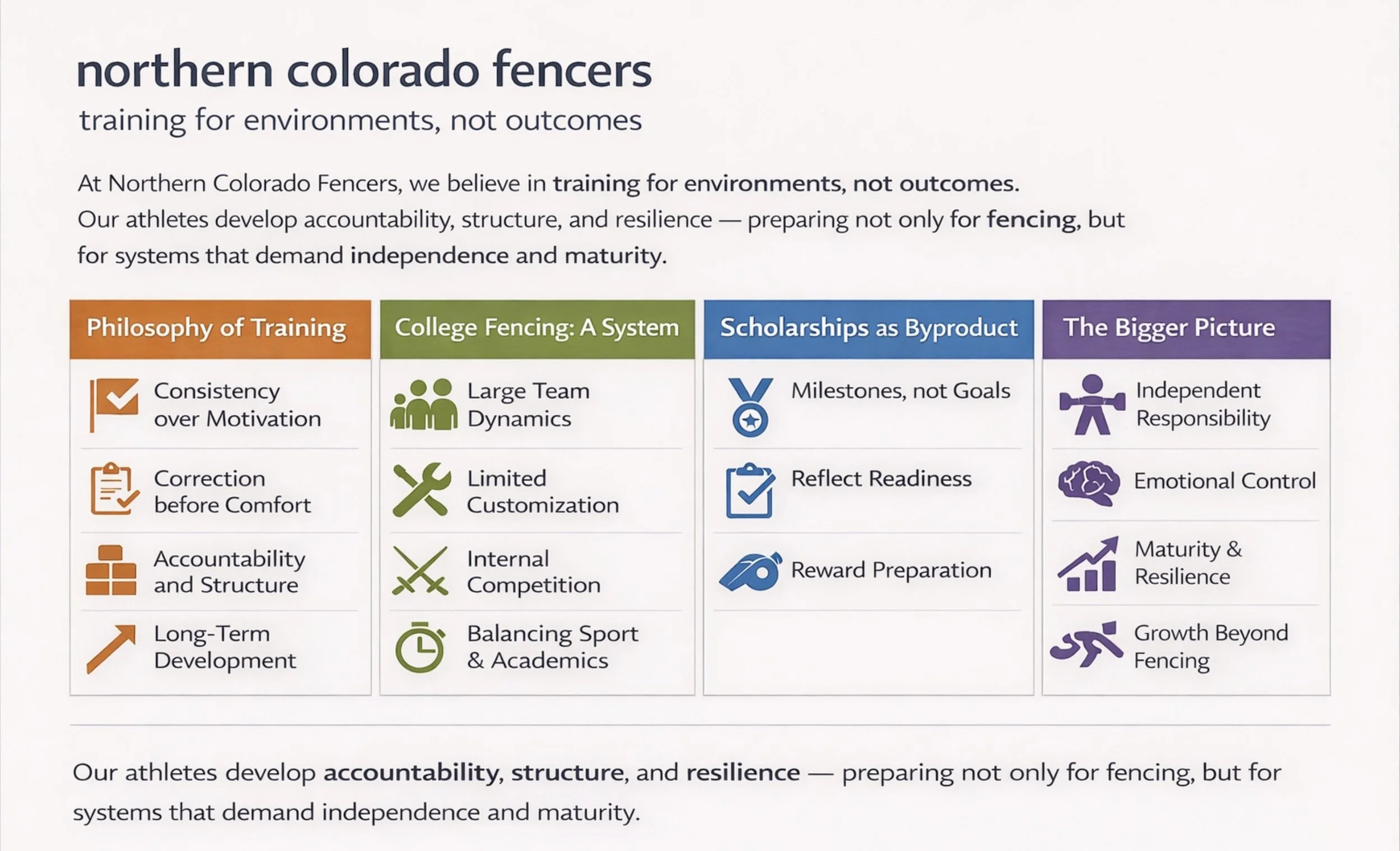
NCAA & Competition - Our Perspective
NCF Boulder has a long history of preparing athletes for collegiate fencing, including NCAA programs. Athletes from this club have gone on to fence at the collegiate level and receive meaningful scholarship support. This is not hypothetical for us, and it is not new.
At the same time, NCAA fencing is an environment, not a prize.
We train athletes to fence well - technically, physically, and mentally - so they are prepared for demanding environments. Collegiate fencing is one such environment. It is visible and structured, but it is not the only measure of development, and it is not the purpose of training.
Who This Page Is For
This page is written for families and athletes who want a clear, realistic understanding of how we approach:
long-term athlete development
competition decisions
collegiate fencing as a possible pathway
It is not a promise of recruitment, a guarantee of placement, or a “college fencing package.” Our role is preparation and honest guidance.
What NCAA Programs Actually Require
Athletes who succeed in collegiate fencing typically demonstrate:
strong technical fundamentals
consistent training habits over time
comfort with pressure and fast decision-making
coachability, independence, and adaptability
physical and mental durability
These traits are built through structured, long-term training, not through shortcuts, early outcome-chasing, or constant competition without foundation.
That reality shapes how we train.
College Is a System, Not an Outcome
College fencing operates within a system that includes:
roster and lineup limits
training volume expectations
academic demands and time management
coaching styles that vary widely
competitive pressure that assumes technical independence
Athletes who arrive without reliable fundamentals or the ability to train consistently often struggle, regardless of talent. Our goal is to prepare athletes who can enter that system ready, not simply athletes who achieve early results.
How We Approach College Preparation
When NCAA fencing is a serious goal, preparation becomes more intentional — not more frantic.
Coaches guide athletes on:
training consistency and appropriate workload
technical priorities and tactical growth
competition selection and timing
building reliable performance across environments
College readiness is not only about fencing. Athletes must also develop maturity, independence, and the ability to balance demands.
We do not frame college as a reward. We frame it as a demanding next environment that some athletes choose.
Competition at NCF
Competition at NCF is optional and coach-guided.
Some athletes compete regularly. Others train seriously with little or no competition. Both paths are valid here. Competition is treated as an application of training, not as the purpose of training.
Coaches help athletes and families decide:
when competition is appropriate
which events make sense
how competition fits into long-term development
how to evaluate performance without overreacting to single results
For athletes pursuing NCAA fencing, competition decisions remain coach-directed. The goal is not to fence everything; the goal is to fence what supports development.
Scholarships and Recruiting: A Reality Check
Families often ask about scholarships. The reality is:
collegiate opportunities exist, but they are not uniform
scholarship support varies by school and circumstance
recruiting is influenced by timing, academics, fit, and readiness - not a single result
We are always honest about where an athlete is in their development and what the next appropriate step is. We do not over-promise or push families into pressure-driven decisions.
In Short
We take NCAA fencing seriously.
We also take athlete development seriously.
By prioritizing training quality, readiness, and long-term growth, we prepare athletes for demanding competitive environments — including collegiate fencing - when it is the right fit.
Over the years, four NCF-trained fencers-athletes who developed through long-term training at the club have collectively won seven NCAA fencing championships. This figure reflects championship titles only and does not include NCAA finalists, World Cup appearances, national championships/finalists, or other international results which measure over 1,500 individual and team.
That balance is intentional, and it reflects decades of coaching experience.